Why a defined process matters
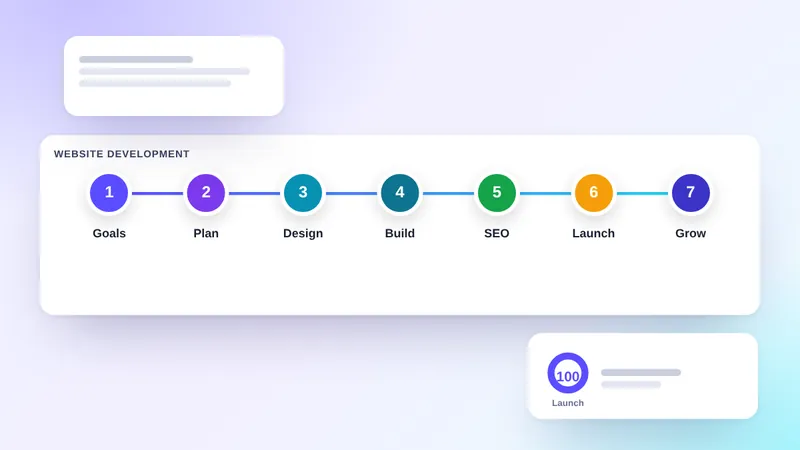
A clear process keeps projects on time and on budget by making decisions at the right moment. It also tells you exactly when your input is needed. This step-by-step view complements our complete guide to website development.
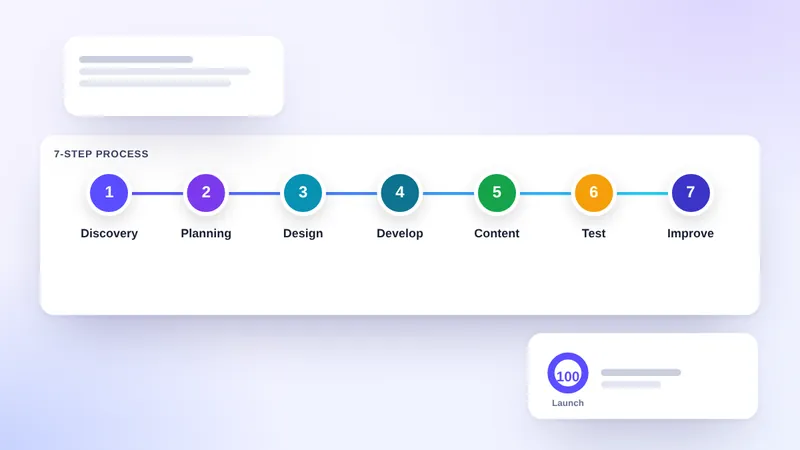
1. Discovery
We clarify business goals, audiences, competitors and success metrics, and review any existing site and analytics. You provide: access to stakeholders, current data and your priorities.
2. Planning and information architecture
We create the sitemap, page outlines, keyword mapping and a content plan. You provide: feedback on structure and any existing content.
3. Wireframes and visual design
Low-fidelity wireframes settle layout and hierarchy; visual design then applies your brand through a reusable design system. You provide: consolidated feedback within agreed review rounds.
4. Development
Templates and components are built, the CMS is configured and integrations are connected — usually on a staging site you can review. You provide: third-party account access and test data.
5. Content population
Final copy, images and metadata are added, with alt text and internal links. You provide: approved content or sign-off on content we write.
6. Testing and launch
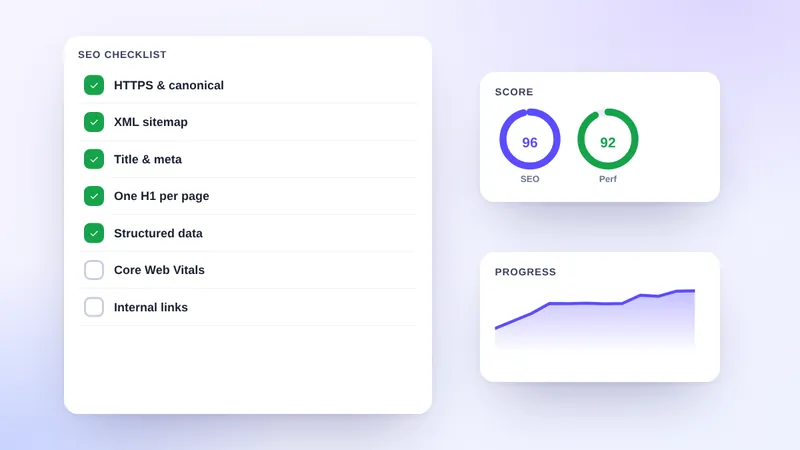
We test across browsers and devices, check accessibility and performance, verify forms and tracking, and set up redirects before a planned launch. Our website SEO checklist covers the search-related checks.
7. Measure and improve
After launch we monitor performance, fix issues quickly and recommend improvements based on real user behaviour. See how we approach this on our website development service.