What we mean by each approach
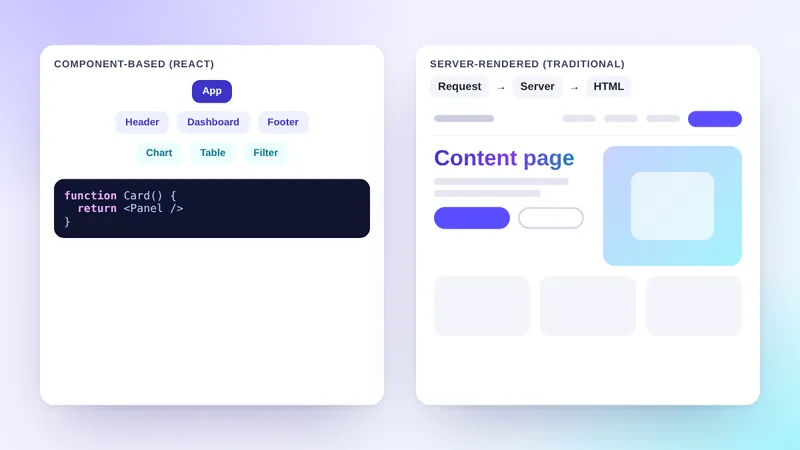
Traditional web development renders pages on the server — for example with PHP, Laravel or WordPress — and sends complete HTML to the browser, adding JavaScript only where needed.
React development builds the interface from reusable JavaScript components. With frameworks such as Next.js, pages can still be rendered on the server or generated in advance, then become interactive in the browser.
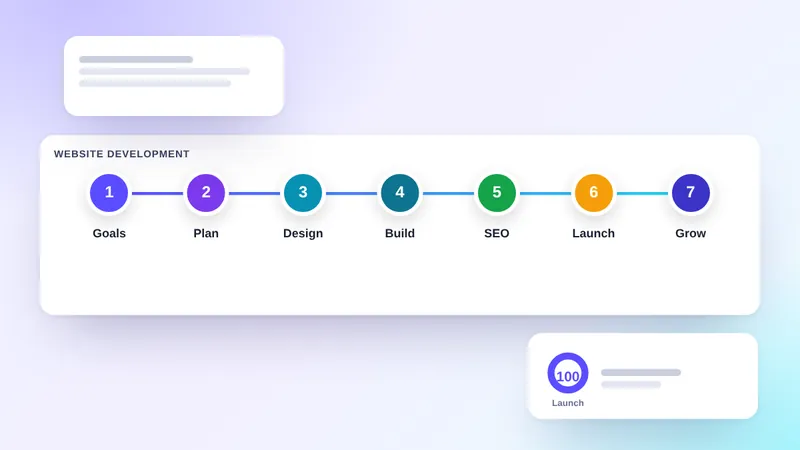
This comparison is part of our complete guide to website development.
Side-by-side comparison
| Factor | Traditional | React / Next.js |
|---|---|---|
| Best for | Content sites, marketing sites, CMS-driven pages | Interactive apps, dashboards, complex UI state |
| SEO | Strong by default (HTML from server) | Strong when server-rendered or statically generated |
| Performance | Fast with little JavaScript | Fast when JavaScript is carefully budgeted |
| Content editing | Mature CMS options | Usually via a headless CMS |
| Developer pool | Large | Large |
When React is the better choice
- The site behaves more like an application — filters, dashboards, real-time updates.
- You're building a product that shares components with a web app or mobile app (React Native).
- You need fine-grained control over interactive UI state.
When a traditional build is the better choice
- The site is mostly content and marketing pages.
- Non-technical editors need a familiar CMS.
- You want the lowest JavaScript footprint for speed.
The hybrid middle ground
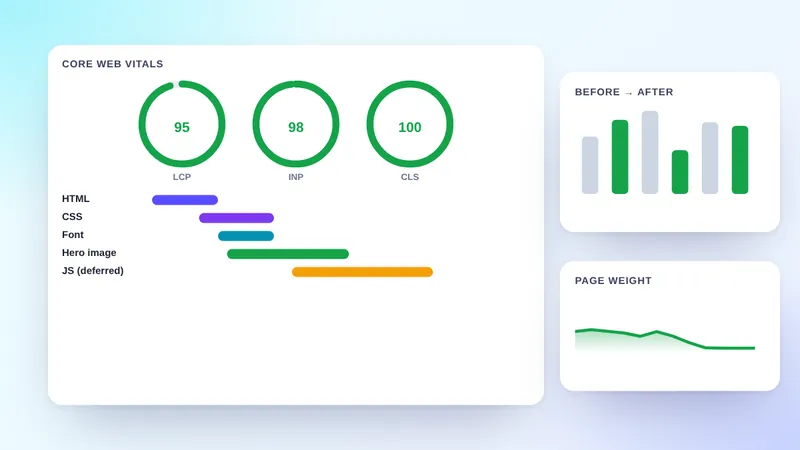
Many modern projects combine both: server-rendered pages for content and SEO, with interactive components added only where they help users. Whatever you choose, performance discipline matters more than the framework — see how to improve website speed.
Need help deciding? Our custom software and website development teams work with both approaches.